2026-10-13 ·
Why Does Your Dryer Take Too Long to Dry Clothes?
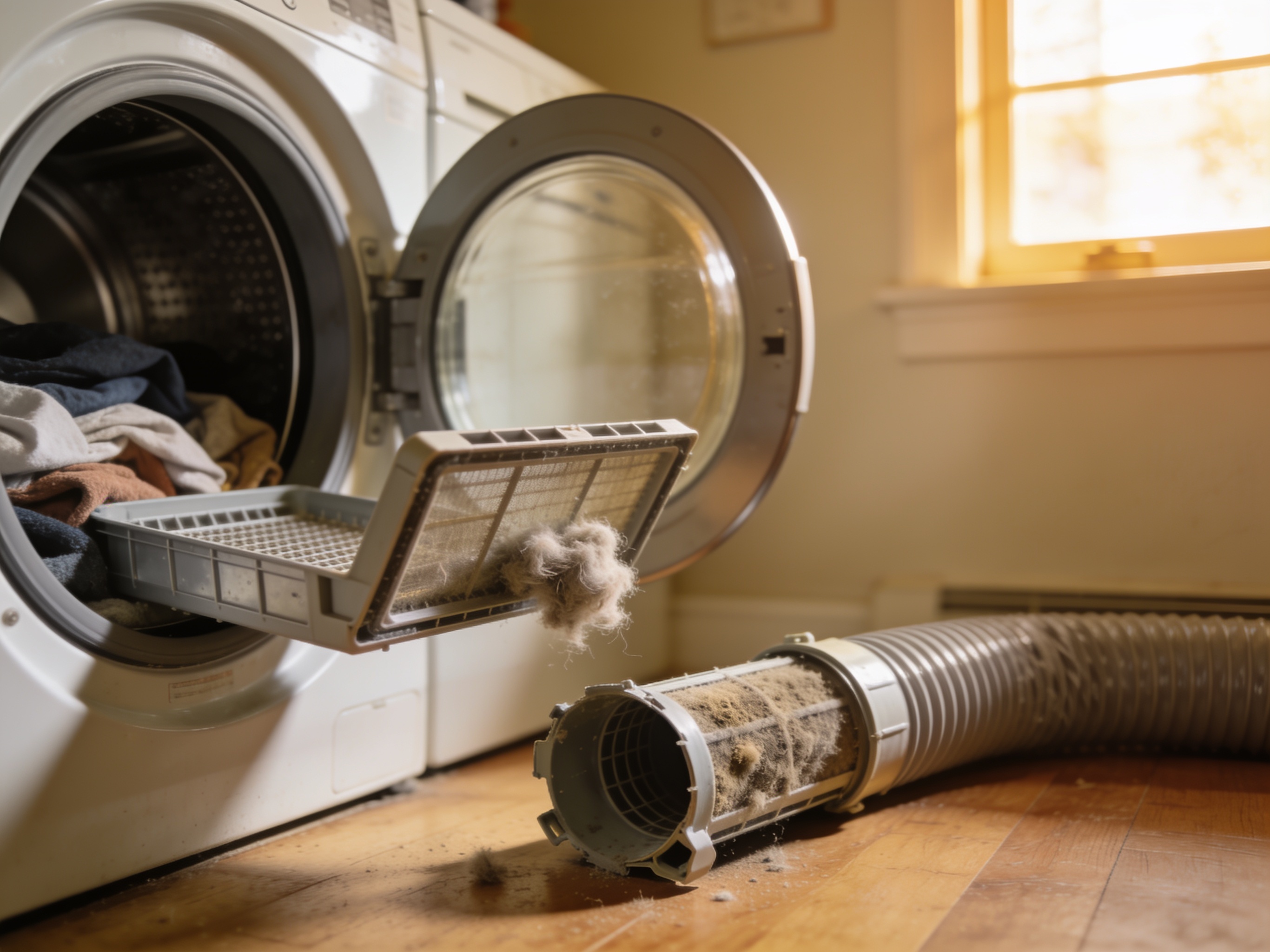
A dryer that runs longer than about 90 minutes on a normal cycle is almost always dealing with restricted airflow or a heat source that is not producing enough warmth. A healthy machine typically finishes a standard medium load in roughly 45–75 minutes, depending on fabric weight and load size. The most common culprit, especially in Chicago, is the exhaust vent, because moist air that cannot leave the drum has nowhere to go and clothes stay damp. The sections below walk through the causes we see most often in the city, in the order we usually check them.
Restricted Exhaust Vents in Older Chicago Buildings
The exhaust vent is the most frequent reason a dryer takes too long, and it is especially common in the vintage buildings that fill Lincoln Park, Wicker Park, Logan Square, and Rogers Park. Many of these homes were built with long, twisting vent runs that snake through joists, pass around corners, and sometimes end in a basement-level wall cap. Each 90-degree elbow and every extra foot of flexible foil or vinyl duct adds resistance, and once a run gets past roughly 35 feet, drying times climb noticeably. Flexible plastic ducting, which some older installations still use, sags and traps lint, shrinking the opening over time.
Chicago winters add a second problem. Exterior vent hoods on lake-facing and courtyard walls can collect ice and packed snow, and the flapper may stick closed. When that happens, the dryer keeps pushing humid air into a sealed space and the cycle drags on. Check the hood outside while the dryer is running. You should feel a steady stream of warm, moist air. If you feel very little, the vent is the likely cause.
Lint Buildup Behind the Drum and in the Filter
Even when the outside vent is clear, lint can accumulate in places most homeowners never look. The lint screen catches the bulk of the fibers, but fine particles pass through and settle inside the cabinet, on the blower wheel, and in the duct connection behind the machine. A thin film of lint on the blower wheel reduces airflow in the same way a clogged vent does, and it can also make the motor work harder and run warmer.
Before you call anyone, pull the lint screen and wash it with warm water and a soft brush to remove the dryer-sheet residue that coats the mesh and blocks air. Then unplug the dryer and pull it away from the wall to inspect the duct connection. Many homes in Bridgeport, Pilsen, and Andersonville have older units with tight clearances, so the rear panel is often harder to reach than it should be. If you see a grey felt-like mat around the blower housing, that is a sign the machine needs professional cleaning, which can restore performance quickly.
Heating Element, Thermostat, and Gas Burner Problems
If airflow checks out, the next suspect is the heat source. Electric dryers rely on a heating element, and a blown thermal fuse or a failed high-limit thermostat can keep the element from reaching full temperature. The machine may tumble normally and feel warm at the exhaust, yet clothes come out damp because the drum never gets hot enough to drive moisture off efficiently. Replacing these parts is typically inexpensive, often in the $75–$200 range including labor in most markets, though the exact price depends on the model.
Gas dryers add a burner assembly and a gas valve to the picture. A dirty or misaligned flame sensor, a weak igniter, or a partially closed gas valve can cause the burner to cycle on and off, which lengthens every load. In many Chicago homes, gas dryers share a line with a water heater or furnace, so pressure fluctuations during cold snaps can contribute as well. If you smell gas or the burner flame looks yellow instead of blue, stop using the dryer and contact a qualified technician right away.
Overloading, Moisture Sensors, and Everyday Habits
Sometimes the machine is working perfectly and the load is simply too big. Stuffing a dryer with heavy towels, bedding, or several pairs of jeans reduces the tumbling action that exposes damp fabric to warm air. A full drum should still have room for clothes to move freely, and a mix of heavy and light items dries unevenly, so the lighter pieces sit warm while the towels stay wet.
Moisture sensor dryers introduce another variable. These models stop when they detect dryness through metal contact bars inside the drum. If those bars are coated with fabric softener residue or dryer sheet film, the sensor reads the load as dry too early or keeps running because it never registers a change. Wiping the bars with a damp cloth every few weeks fixes this. Choosing the auto-dry setting on a clean drum and sorting loads by fabric weight will also shorten cycles. Apartments in Uptown and Hyde Park, where laundry is often shared, benefit most from these simple habits because a single machine may run many loads a day.
When to Call a Technician and What It Costs
If you have cleared the vent, cleaned the lint path, wiped the moisture sensor, and loaded the drum correctly, but cycles still run past 90 minutes, it is time for a diagnostic. A technician will measure exhaust airflow, test the thermal fuse and thermostat with a meter, check the gas burner or heating element, and confirm the blower spins at proper speed. Diagnostic visits typically run $80–$150, and common repairs such as a replacement blower wheel, heating element, or thermal fuse usually fall between $120–$350 depending on parts availability and the make of the dryer.
Seek help sooner if you notice a burning smell, scorch marks around the lint screen, or a dryer that runs hot to the touch. Those are fire hazards, and lint fires are a real risk when airflow is restricted. For a broader look at extending the life of your appliances, read our guide on how to extend the lifespan of your household appliances. Dryers generally last 10–13 years with regular maintenance, and most of the problems described here are preventable with a few minutes of attention each month.
Veridian Group is based at 150 E Huron St, Chicago, IL 60611, and we handle dryer diagnostics across the city and nearby communities including Evanston and Oak Park. We are available 24/7, so a dryer that stops working on a Sunday night do