2026-10-13 ·
Electric Stove Problems: Troubleshooting Common Issues
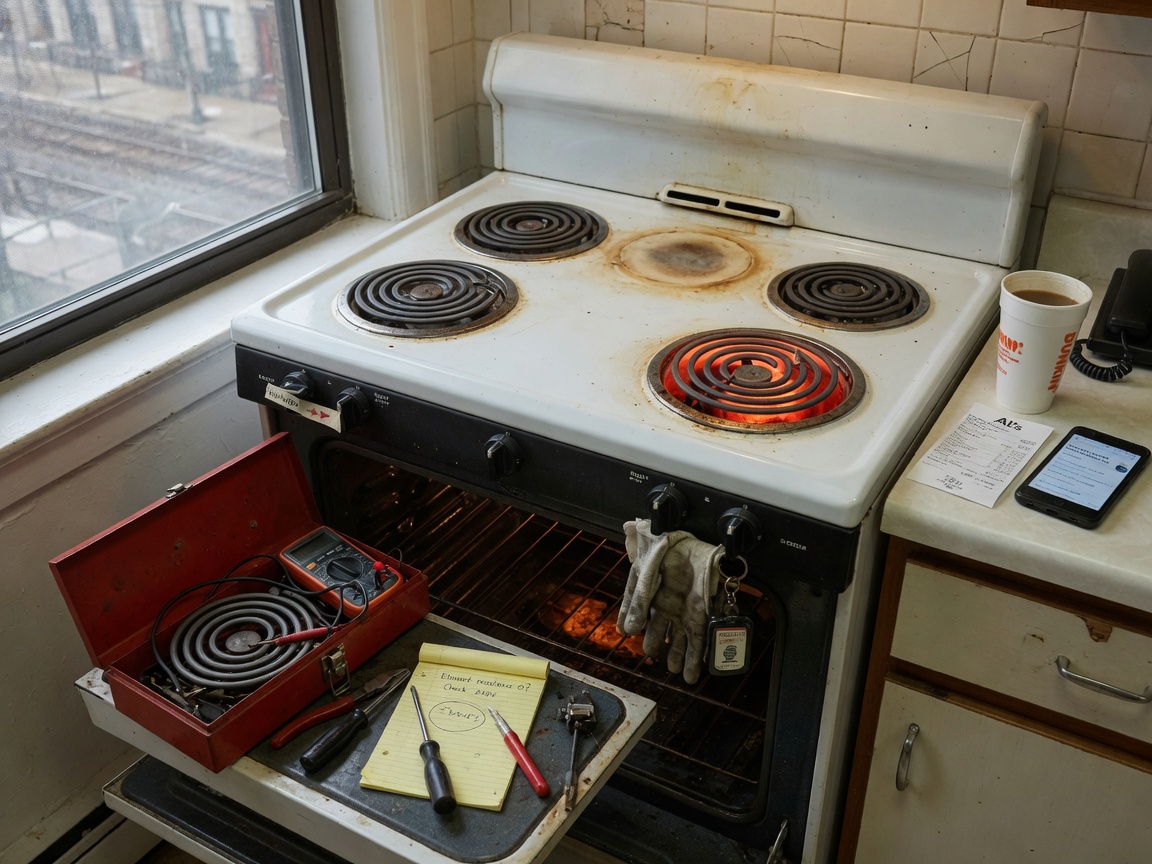
Most electric stove problems come down to five causes: a dead or weak power supply, a burned-out surface element, a faulty control or touch panel, a failed oven heating element or temperature sensor, or a worn igniter in a range with a broiler. Many of these can be narrowed down in about 30 minutes with a visual inspection and a basic multimeter. Start with the cheapest and safest checks first, and only escalate to parts replacement once you know which component has failed. Doing this work yourself also gives a technician a clearer starting point if you do end up calling someone out.
Start With the Power Supply
Before you touch any component, confirm the range is getting full power. Electric ranges run on a dedicated 240-volt circuit, typically rated at 40 to 50 amps. If the stove is completely dead, check the breaker panel first, because a tripped double-pole breaker looks identical to a healthy one until you reset it. In older Chicago buildings, including many greystones and courtyard walk-ups in Lincoln Park, Lakeview, and Logan Square, the range may still be on a three-wire cord connection rather than the four-prong setup used today. Loose or corroded connections at the outlet or terminal block are common in these older installations and can cause one side of the stove to work while the other does not.
If the breaker trips repeatedly, stop troubleshooting and shut off the circuit. A recurring trip usually means a short, a damaged heating element touching its housing, or a wiring fault that needs a licensed electrician to resolve safely.
Burners That Won't Heat or Heat Unevenly
When one surface burner stays cold, the problem is usually the surface element or its infinite switch. Turn the element on high and watch it for about a minute. A healthy coil should begin glowing red within a few moments. If it stays dark or only glows in patches, the coil has likely failed internally, and replacement is the practical fix. Surface elements commonly cost between $25 and $90 for the part, with labor adding more depending on the model and the shop you use.
Uneven heating has a different cause. A coil that glows in sections or cycles on and off unevenly often has a worn connection at the terminal or a pitted coil that has lost contact. Cookware matters too. A warped pan with a curved bottom will sit unevenly on the element and make the stove look broken when the cooktop is actually fine. Test with a flat-bottomed pan before assuming the element has failed.
Controls, Touch Panels, and Error Codes
Many newer ranges display error codes such as F-codes or lock indicators. Check the owner's manual for the code list before doing anything else, since codes differ by manufacturer. A control lockout is often the simplest fix. Holding the lock or child safety button for several seconds usually clears it, and some models reset when you cut power at the breaker for a minute.
Touch panels deserve special care. Spilled liquids, steam, and grease can cause sensors to read phantom touches or stop responding entirely. Wipe the panel with a damp microfiber cloth and dry it fully. If a burner keeps switching on by itself, the control board or the membrane panel may be failing. Control boards are one of the more expensive parts to replace, often running $150 to $400 installed, so confirm the diagnosis before ordering one.
Oven Heating Problems
If the oven will not heat, or runs too cool or too hot, check the bake element first. A bake element that shows visible blisters, breaks, or no glow when powered is failing. Then check the temperature sensor, a thin probe that tells the control how hot the cavity is. A bad sensor often causes the oven to overshoot and burn food or stop heating before reaching the set temperature. An oven thermometer placed in the center of the rack will confirm how far off the reading is.
Chicago's hot summers and cold winters make a difference here. Ovens that sit in kitchens with drafty windows or uninsulated exterior walls can run slightly cool in January, which tempts people to raise the setpoint and damage the seal. Calibrate before you adjust. If the oven still misbehaves after these checks, a professional oven repair visit is usually the right next step, since element and sensor work involves high-voltage wiring that deserves caution.
When to Stop and Call a Professional
Stop troubleshooting and call for help if you smell burning insulation, see scorched wiring at the terminal block, or notice the breaker trips immediately after reset. These are electrical hazards, not appliance quirks. Also stop if the stove is more than 10 years old and multiple components are failing at once, since repairing an aging range can cost more than a replacement that includes a warranty. Repairs for a single element or sensor are often the best value for ranges still in good condition.
If you are dealing with a problem at night or on a weekend, Veridian Group is based at 150 E Huron St, Chicago, IL 60611, and operates 24/7, so you can reach out when a stove outage hits during a dinner rush or a holiday. Keeping up with basic care, like cleaning drip pans, checking cord connections, and avoiding harsh cleaners on touch panels, can prevent many of these failures. For more on routine upkeep, read how regular appliance maintenance can save you money, and for longer-term planning see how to extend the lifespan of your household appliances. Homeowners in Lincoln Park and nearby neighborhoods often find that catching a small fault early keeps a simple repair from becoming a full replacement.